Why Lactate Testing is Less Useful Than VO2 Testing
Why Lactate Testing Is Less Useful Than VO₂ Testing
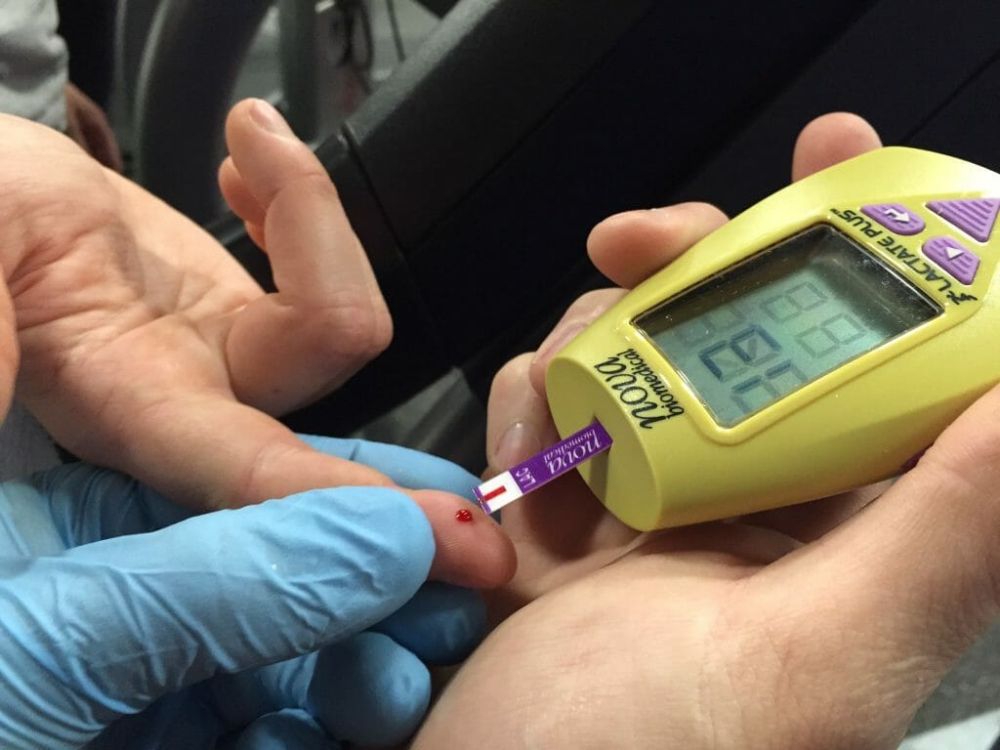
Lactate testing has been used in sport for decades, and it can still offer some insight. But on its own, it gives a narrow and incomplete picture of how an athlete actually performs. Compared with VO₂ testing, it answers fewer questions and leaves more room for guesswork.
Lactate Is an Indirect Marker
Blood lactate is a by-product, not a direct measure of performance or metabolism.
What you see in a lactate test reflects the balance between:
-
Lactate production
-
Lactate clearance
-
Transport from muscle to blood
This balance is influenced by many factors unrelated to aerobic fitness:
-
Recent training load or fatigue
-
Nutrition and carbohydrate availability
-
Muscle fibre type
-
Sampling timing and technique
As a result, lactate curves can shift day to day without any true change in underlying fitness.
VO₂ Measures the System Directly
VO₂ testing measures what actually matters:
-
Oxygen uptake
-
Carbon dioxide production
-
Ventilation
-
Fuel use
-
Cardiorespiratory response to increasing workload
This allows you to see how the whole system behaves, not just the downstream result of metabolic stress.
Instead of inferring what might be happening, VO₂ testing shows it.
Thresholds: Estimated vs Measured
Lactate testing relies on assumed thresholds (e.g. fixed mmol values or curve interpretation). These are:
-
Population-based
-
Highly variable between individuals
-
Sensitive to protocol design
VO₂ testing identifies thresholds physiologically, using ventilatory and gas-exchange responses. These thresholds:
-
Are repeatable
-
Reflect real metabolic transitions
-
Translate more reliably into training zones
Submaximal Insight Matters More Than Maximal Numbers
Most training and competition happens well below maximal effort.
Lactate testing provides limited information at lower intensities because:
-
Lactate may remain flat across wide workload ranges
-
Small changes are hard to interpret meaningfully
VO₂ testing, by contrast, shows:
-
Oxygen cost at submaximal workloads
-
Ventilatory efficiency
-
Fuel utilisation (fat vs carbohydrate)
-
Whether training is truly aerobic
This is where performance gains are usually made.
Practical Limitations of Lactate Testing
-
Invasive and uncomfortable
-
Time-consuming with repeated finger pricks
-
Requires strict protocol control
-
Often poorly standardised outside labs
And despite all that, it still doesn’t explain why performance is limited.
Bottom Line
Lactate testing can tell you that stress is increasing.
VO₂ testing tells you how and why.
If the goal is to understand efficiency, set accurate training zones, track meaningful adaptation, and guide long-term performance, VO₂ testing* is the more complete, more reliable, and more useful tool.
*Make sure you get tested at a facility that measures both O2 and CO2 – you cannot get useful metabolic data with O2 data alone. Also make sure the people doing the test are Exercise Scientists, experienced Physiologists or Sports Medicine Doctors so that you know they are getting interpreted by people that have gone through years of training to fully understand what they’re measuring and why they’re doing it.